

Between Thanksgiving and New Year, a Florida kitchen tap does more work than in the rest of the year put together: stock and gravy, pasta water, coffee for a houseful, ice by the bucket, and pitchers of water on the table. Everything that is in your water ends up in the food and the glass, and a house full of guests notices things the family stopped noticing years ago.
Here is what to think about before the first guests arrive, and what can be fixed in an afternoon.
Chlorine, and what it does to flavor
Most Florida city water carries a chlorine or chloramine residual from the utility, which is what keeps it safe in the pipes. It is also the taste people describe as “pool water”. In a glass it is noticeable; in anything you reduce or simmer, it comes through as a flat, slightly chemical note, because the water boils away and the flavor it carried stays. Coffee and tea show it most, since both are mostly water and both are made hot.
The EPA treats taste and odor as a water quality problem under its secondary standards, which is to say: not a health issue at these levels, but a real one. Activated carbon is what removes it. A whole-home carbon system takes chlorine out before the water reaches any tap, including the dishwasher and the ice maker; an under-sink unit handles the kitchen tap alone.
Ice: the test everyone runs without knowing it
Ice is where water quality is hardest to hide. Cloudy, off-tasting ice usually means one of three things: the refrigerator’s filter cartridge is overdue, the water going in carries chlorine or sulfur, or the ice bin has not been emptied and cleaned in a while. Refrigerator filters are mostly small carbon cartridges with a limited life; check the date on yours, replace it, and discard the first two batches of ice afterwards. If the taste persists, the problem is upstream of the fridge.
An under-sink reverse osmosis system such as the RO-6Q can be plumbed to feed the refrigerator’s water and ice line as well as its own drinking tap, so ice, chilled water and the pitcher on the table all come from the same filtered supply. On a well with sulfur or iron, the fix sits further back, at the whole-home well system, because the whole house smells it, not just the ice.
Cooking water: cold, and filtered if you can
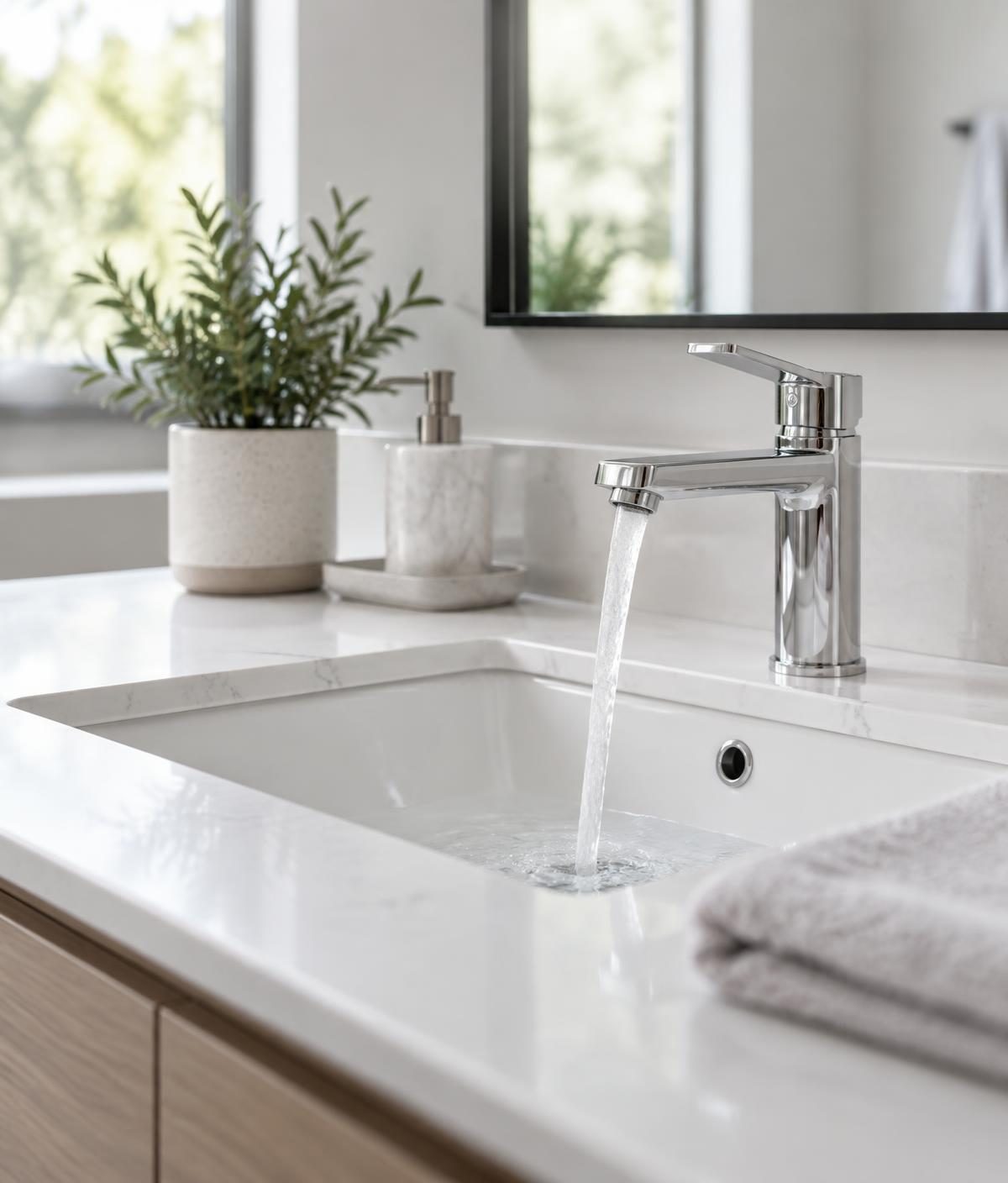
Two habits worth adopting for the season, both from the EPA’s lead guidance. First, cook with water from the cold tap, never the hot. Hot water dissolves more of whatever is in your plumbing, lead included in older homes. Second, boiling does not remove lead or other metals; as the water boils off, their concentration goes up. For stock, pasta and anything that simmers for a long time, filtered cold water is the safe habit.
If your home was built before 1986 and still has original plumbing, a reverse osmosis unit at the kitchen sink is the simplest protection, and it improves the taste of everything you cook at the same time.
Hard water and the washing-up
Florida’s water is hard almost everywhere, and the holidays are when the glassware comes out. Spots on glasses and a film on the good plates are mineral residue, not poor rinsing. A water softener or a salt-free conditioner is the long-term answer; for this week, a rinse aid in the dishwasher and hand-drying the glasses will get you through.
A checklist for the week before
- Replace the refrigerator filter and empty the ice bin.
- Run every tap that has not been used for a while until the water runs cold, especially in a guest bathroom.
- If you have a Galene system, check the salt level in the brine tank and that the bypass valve is in service; a softener left in bypass after a repair is the most common reason “the water went hard again”.
- If you have an under-sink RO, check the filter-change date on the cartridges; the holidays are a poor time to run out of drinking water.
- If the water smells, tastes or looks different from last month, call before the guests do.
Galene customers can book a pre-holiday service visit on 844-942-5363. If you do not have a system yet and want to know what is in your water before the season starts, request a free in-home consultation and we will test it at your kitchen sink.
Common questions
- Why does my ice taste or smell odd?
- Ice concentrates whatever is in the water, and the ice maker’s small filter, if it has one, is often months past its change date. Replace the cartridge, dump the first two batches of ice, and if the smell is chlorine, a whole-home carbon system or an under-sink reverse osmosis unit feeding the fridge line fixes it at the source.
- Does boiling water for cooking remove chlorine and lead?
- Boiling drives off some chlorine, but it does not remove lead or other metals; as water boils away, their concentration rises. Use cold, filtered water for cooking and for filling the kettle.
- Can I add filtered water to the fridge and ice maker?
- Yes. An under-sink reverse osmosis system can be plumbed to feed the refrigerator’s water and ice line as well as a drinking tap, so ice, chilled water and the kitchen tap all come from the same filtered supply.