
Most of Florida drinks from the Floridan aquifer, a vast body of groundwater that sits in limestone. Limestone is calcium carbonate. As rainwater seeps down through it, the water picks up dissolved calcium and magnesium, and that is what “hard water” means. The same minerals that built the rock are now in your pipes, your water heater and your shower glass.
How hardness is measured
Hardness is reported as milligrams per liter of calcium carbonate, or as grains per gallon. One grain per gallon is about 17.1 milligrams per liter. The U.S. Geological Survey uses four bands:
- Soft: 0 to 60 mg/L
- Moderately hard: 61 to 120 mg/L
- Hard: 121 to 180 mg/L
- Very hard: more than 180 mg/L
In grains per gallon, “hard” starts around 7 and “very hard” starts around 10.5. Much of peninsular Florida’s groundwater sits in the hard to very hard range, and private wells drawing straight from the aquifer are often harder than treated city water.
Where to find your own number
If you are on municipal water, your utility publishes an annual water quality report, called a Consumer Confidence Report, which the EPA requires every community water system to deliver to customers by July 1 each year. Hardness is usually listed in the table of secondary or unregulated parameters. If you are on a well, nobody tests it for you. A Galene consultation includes a hardness test at your kitchen sink, which is quicker than hunting for the report and tells you what is actually coming out of your tap today.
Hardness is not a health concern, which is why the EPA treats it as an aesthetic issue rather than a regulated contaminant. It is a home-maintenance and comfort concern, and in Florida it is a big one.
What hard water does
- Scale in the water heater. Minerals drop out of solution when water is heated, so the tank and heating element collect a chalky layer that insulates the element and shortens its life.
- Spots and film. The white residue on dishes, shower doors and faucets is mineral left behind when water evaporates.
- Soap that will not lather. Calcium reacts with soap to form a scum, so you use more detergent, shampoo and dish soap, and still get worse results.
- Dry skin and dull hair. The same soap scum stays on your skin and in your hair after rinsing.
- Reduced flow. Over years, scale narrows the inside of pipes, fixtures and appliance valves.
Softening versus salt-free conditioning
There are two ways to deal with hardness, and they do different things.
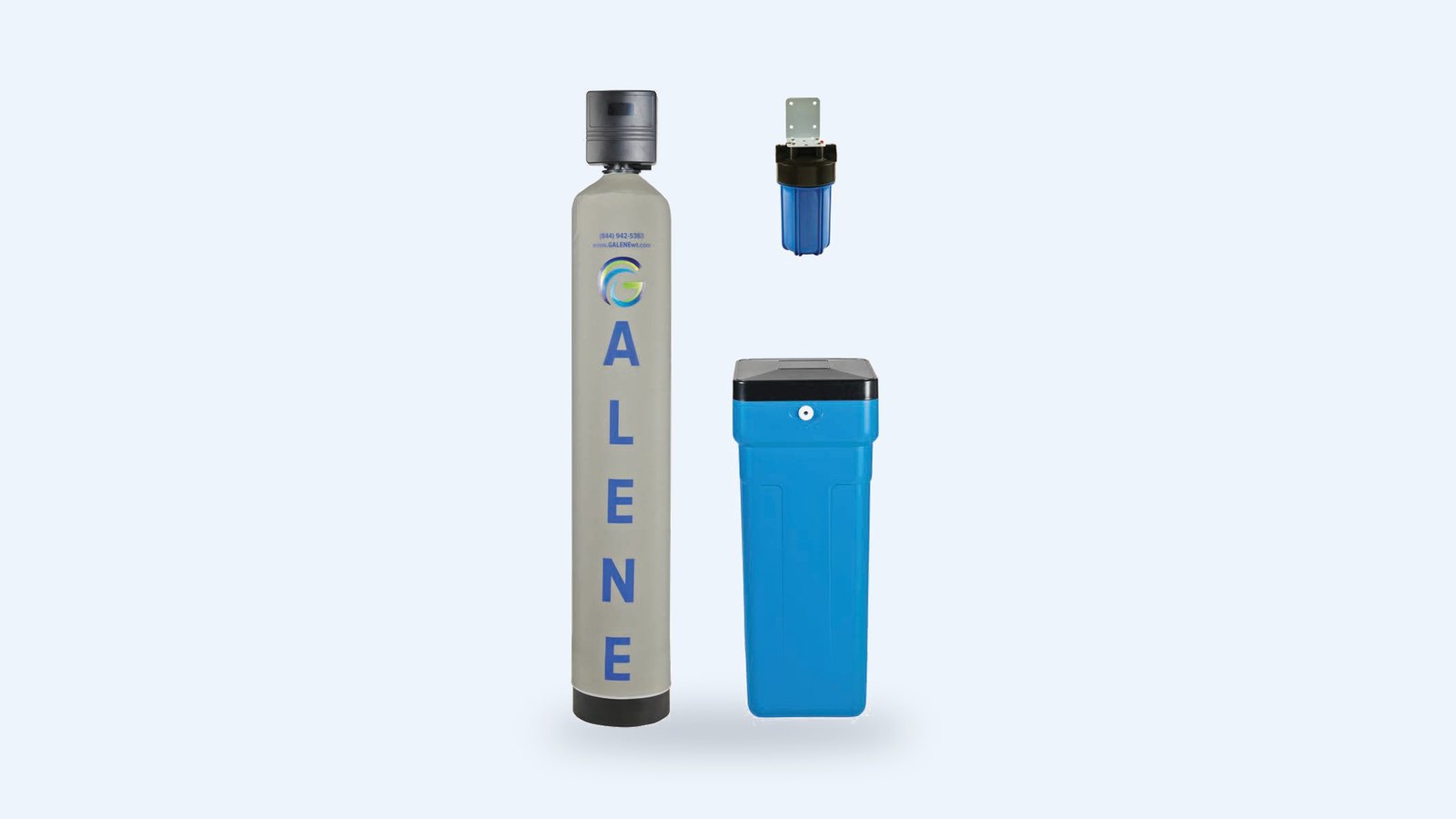
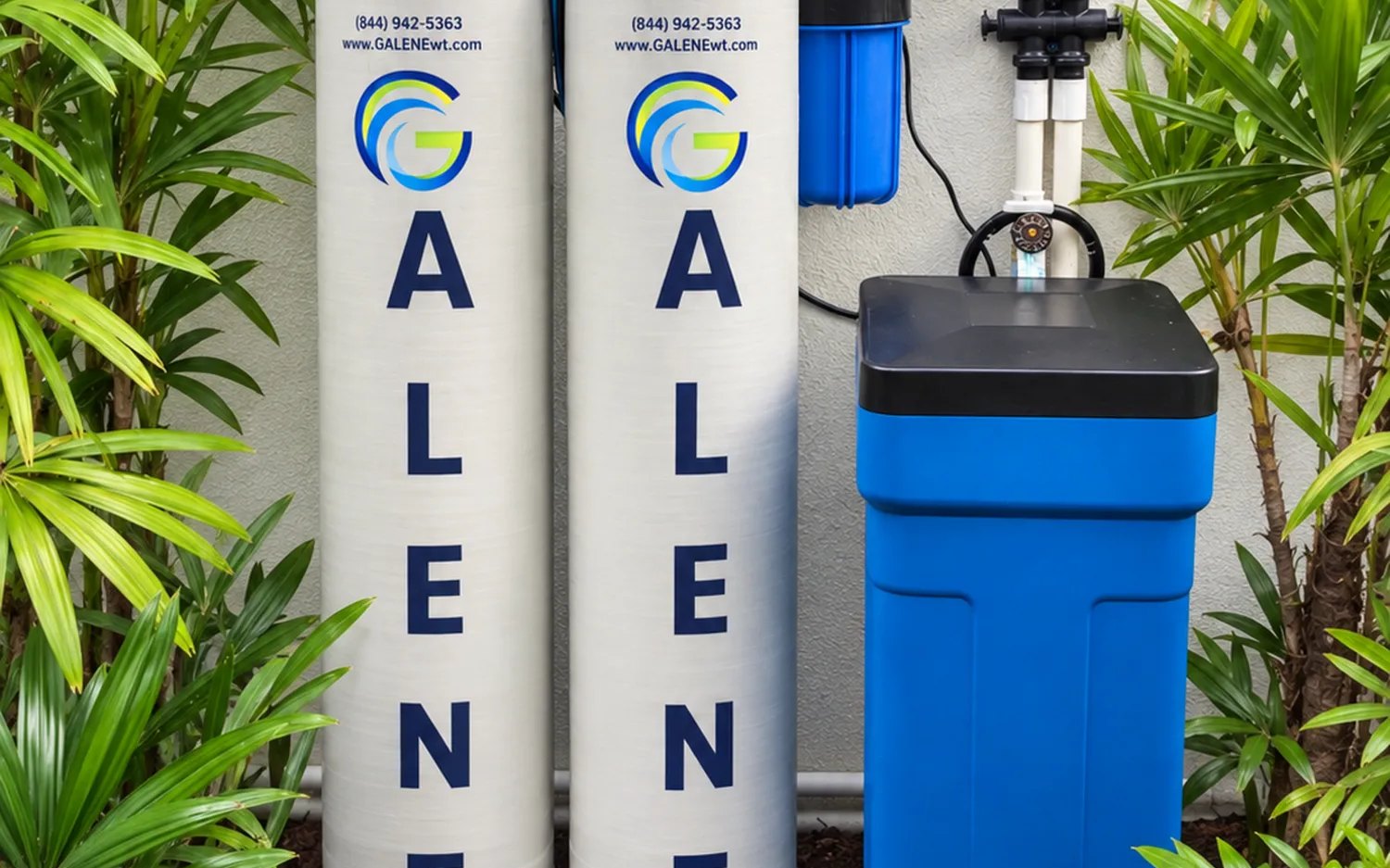
A water softener removes the calcium and magnesium by ion exchange, trading them for sodium or potassium on a resin bed that is periodically rinsed with brine. The result is genuinely soft water: no scale, no spots, soap lathers easily, skin and hair feel different. Galene’s GS series softener and the combined GCS carbon and softener system work this way. The trade-off is that the system uses salt and sends brine down the drain during regeneration.
A salt-free conditioner does not remove the minerals. It changes them into a crystal form that is far less likely to stick to surfaces, so scale formation drops sharply. Water still tests as hard, and you will not get the slippery feel of softened water, but there is no salt, no brine and no electricity. Galene’s GCES, The Easy System and the G-Guard are built around this approach. Many Florida homeowners choose it for low maintenance or because their community restricts salt-based softeners.
Which one fits depends on your hardness number, whether you are on a well, what else is in the water, and what you want to feel at the tap. That is why we test first and recommend second. If you would like your water tested, request a free in-home consultation and we will bring the kit to you.
Common questions
- Is Florida tap water hard or soft?
- Mostly hard. Florida draws from the Floridan aquifer, which sits in limestone, so the water picks up calcium and magnesium. Much of the peninsula falls in the USGS hard to very hard range, and private wells are often harder than treated city water.
- Is hard water bad for your health?
- No. The EPA treats hardness as an aesthetic issue, not a health contaminant. The damage is to water heaters, fixtures, appliances, skin and hair.
- Water softener or salt-free conditioner for a Florida home?
- A softener removes the hardness minerals and gives you truly soft water. A salt-free conditioner leaves them in but stops most scale, with no salt or brine. The right choice depends on your hardness number, your well or city supply and any community salt restrictions, which is what the in-home test settles.