
“Heavy metals” is a loose term, but for drinking water in Florida it usually means three things: lead, copper and arsenic. They get into water in different ways, they are tested for differently, and they are treated differently, so it helps to take them one at a time.
Lead: it comes from the pipes, not the source
Lead is almost never in the water leaving a treatment plant. It enters afterward, as water sits in lead service lines, old lead solder, and brass fixtures that contain lead. The EPA’s health goal for lead is zero, because there is no known safe level, and the agency says children, infants and pregnant women are the most vulnerable.
The federal rule governing lead in public water was rewritten in October 2024. The Lead and Copper Rule Improvements require utilities to find and replace lead service lines within ten years of the compliance date, lower the action level from 15 to 10 parts per billion, and tell affected customers each year whether their service line is lead, galvanized or unknown. The compliance date is late 2027, and the rule is being challenged in court by water-utility groups, so parts of it may change. The service-line inventories, however, already exist. Most Florida utilities have published theirs, and you can look up your address.
Florida has fewer lead service lines than the older cities of the Northeast and Midwest, but lead solder was legal in household plumbing until 1986, and many brass faucets and valves installed before 2014 contain several percent lead.
Copper: usually your own plumbing
Copper comes from copper pipe, and it dissolves faster when water is acidic or has sat in the pipe overnight. A blue-green stain in a sink or tub is the classic sign. Copper is an essential nutrient at low levels, but the EPA’s action level of 1.3 parts per million exists because higher levels cause stomach upset and, over the long term, liver and kidney effects. On Florida well water, low pH is the usual driver, and the fix is often to correct the pH before the water reaches the pipes.
Arsenic: a well water issue
Arsenic occurs naturally in some rock and soil, and in Florida it has been found in private wells in several counties, sometimes linked to old agricultural land. It has no taste or smell. The federal limit for public systems is 10 parts per billion, but private wells are not regulated, so the only way to know is a laboratory test. The EPA recommends that well owners test every year for bacteria and nitrates, and periodically for metals and other contaminants that are common in their area.
How to find out what is in your water
- On city water: read your utility’s annual water quality report, and check its lead service line inventory for your address. Both are free and usually online.
- On a well: send a sample to a certified laboratory. Your county health department can tell you which labs are certified and what a standard well panel includes.
- Either way: a Galene in-home consultation tests hardness, pH, chlorine, iron and total dissolved solids on the spot. We do not test for lead or arsenic at the sink, because those need a lab, but we will tell you when a lab test is warranted and how to get one.
Treating for metals at home
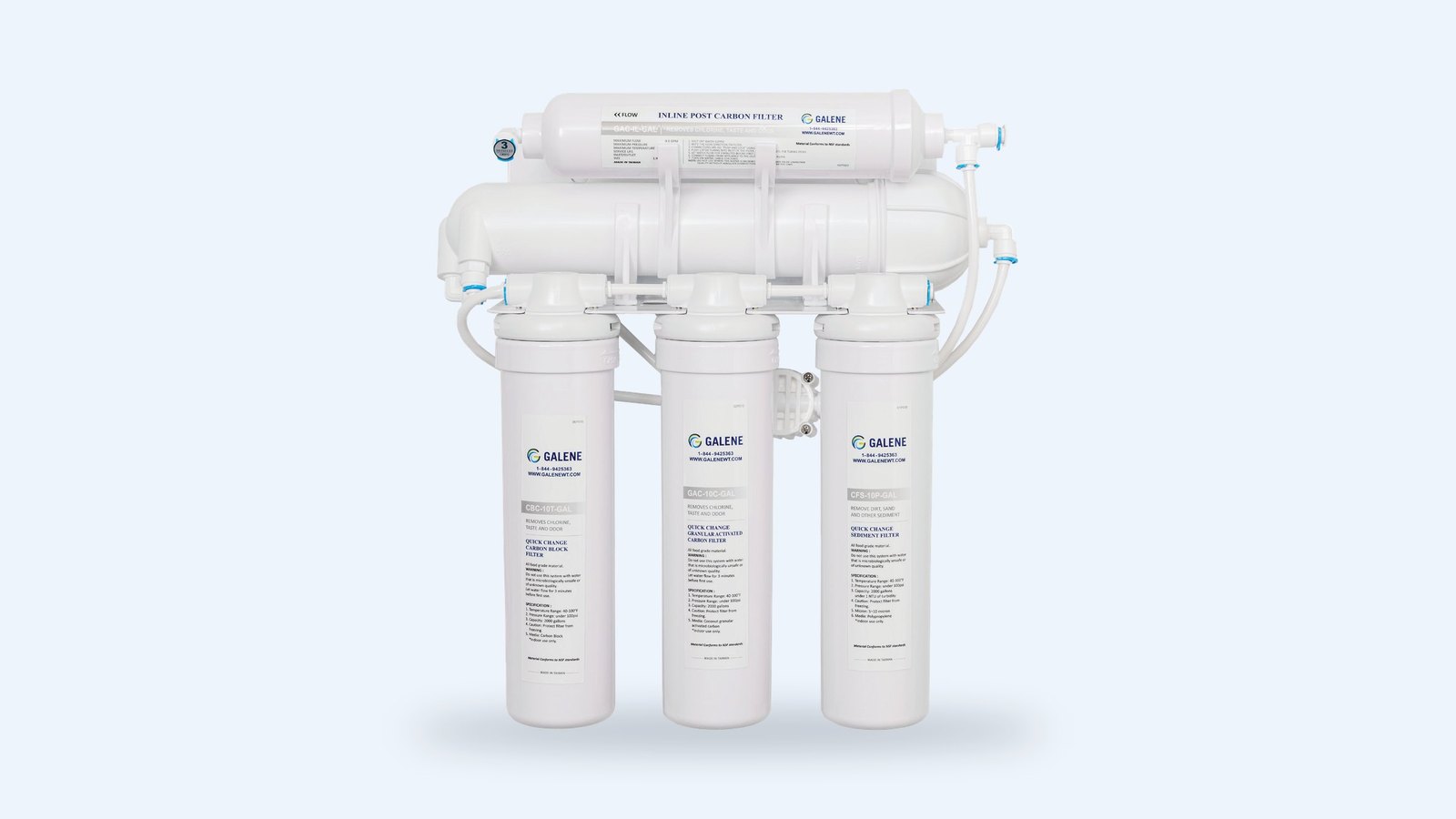
- Reverse osmosis is the most effective point-of-use treatment for lead, copper and arsenic in drinking water. Galene’s RO-6Q and the tankless RO-6Q TL are certified under NSF/ANSI 58 and install under the kitchen sink. For whole-home RO, the RO-4 treats every tap.
- Carbon block filters certified to NSF/ANSI 53 for lead reduction can be effective for lead, with a stated capacity that must be respected.
- pH correction on acidic well water stops the copper problem at its source, and is usually combined with the rest of a well water system.
- Flushing helps in the meantime: if a tap has not been used for several hours, run it until the water turns cold before drinking from it.
If you are unsure where to start, request a free in-home consultation. We will test what we can on the spot, tell you what needs a lab, and recommend only what your water actually calls for.
Common questions
- How do I know if my Florida home has a lead service line?
- Your utility is required to keep a service line inventory and tell you each year if your line is lead, galvanized or unknown. Most Florida utilities have published the inventory online, searchable by address.
- What causes blue-green stains in my sink or tub?
- Copper dissolving out of your own plumbing, usually because the water is acidic. On Florida well water the fix is to correct the pH before the water reaches the pipes.
- Which filter removes lead, copper and arsenic?
- Reverse osmosis is the most effective treatment at the tap for all three. Carbon block filters certified to NSF/ANSI 53 for lead reduction also work for lead within their rated capacity. Whole-home RO treats every tap.